

“Stainless” steel is actually a generic term referring to a variety of steel types. Like all other kinds of steel, stainless steel is made primarily from iron and carbon in a two-step process. What makes stainless steel different is the addition of chromium (Cr) and other alloying elements such as nickel (Ni) to create a corrosion-resistant product.
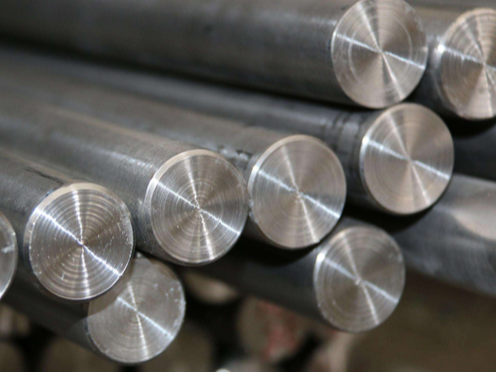
Like other steels, stainless steel is an alloy of iron and carbon. What makes stainless steel different, though, is its inclusion of at least 10.5% chromium, an element that makes the resulting alloy corrosion resistant. Kloeckner Metals supplies stainless steel in various formats, including stainless steel sheet, stainless steel plate, stainless steel tube, and stainless steel bar.
Stainless steel comes in five types, but just three of these typically show up in fabrication shops — austenitic stainless steel, martensitic stainless steel, and ferritic stainless steel. The most common is austenitic. Martensitic stainless steel goes in hard-facing applications. And ferritic steel, the cheapest option, gets used most in consumer products.
Each of these types of steel is categorized based on its microstructure, which influences its ductility and strength. The microstructure of steel depends on its chemical composition. For example, austenitic steel contains 16-26% chromium (Cr) and 8-22% nickel (Ni). Martensitic steel has a Cr content in the range 11-28%. Ferritic steel runs 12-18% Cr. As a result, the material welded to each type of steel must match that steel’s composition.
Steel corrodes because iron, the metal used to make steel, occurs in nature in combination with other elements. When iron ore is artificially manipulated into a pure form to make steel, it becomes unstable and will readily recombine with oxygen.
When chromium is added to steel, it forms chromium oxide, which acts as a protective surface to prevent air and moisture from causing rust, as happens with ordinary steel. Chromium is added in quantities ranging from 10.5 to 30%, depending on the application or environment in which the steel is to be used. There are more than 100 different grades of stainless steel but they can be grouped into five major types:
Austenitic is the most widely used type of stainless steel. It has excellent corrosion and heat resistance with good mechanical properties over a wide range of temperatures. Austenitic steel is used in housewares, industrial piping and vessels, construction, and architectural facades.
Ferritic stainless steel has similar properties to mild steel (the most common steel), but better corrosion, heat, and cracking resistance. Ferritic steel is commonly used in washing machines, boilers and indoor architecture.
Martensitic stainless steel is very hard and strong, though it is not as resistant to corrosion as austenitic or ferritic grades. It contains approximately 13% chromium and is used to make knives and turbine blades.
Duplex stainless steel is a composite of austenitic and ferritic steels, making it both strong and flexible. Duplex steels are used in the paper, pulp, shipbuilding, and petrochemical industries. Newer duplex grades are being developed for a broader range of applications.
Martensitic or semi-austenitic steels can also be classified as precipitation hardening stainless steels. These steels are made to be extremely strong with the addition of elements such as aluminum, copper and niobium.
Corrosion resistance is the main advantage of stainless steel, but it certainly isn’t the only one. Stainless steel is also:
High and low temperature resistant
Easily fabricated
Strong and durable
Easy cleaned and maintained
Long lasting, with a low lifecycle cost
Aesthetically attractive
Environmentally friendly and recyclable.
In addition to chromium, stainless steels are made with alloys of silicon, nickel, carbon, nitrogen, and manganese. Nitrogen, for example, improves tensile properties like ductility. Nickel is added to austenitic steel to improve flexibility. These alloys are added in varying amounts and combinations to meet specific end-use applications, which is why it’s very important for stainless steel manufacturers to verify that the correct percentages of each alloy are being used. There are two technologies that provide the elemental analysis needed to produce high quality stainless steel: X-Ray Fluorescence (XRF) and Optical Emission Spectroscopy (OES).
Handheld XRF and LIBS are highly valuable technologies in the scrap metal market. Stainless steel is 100% recyclable and therefore a huge amount of stainless steel must be evaluated at the scrap yard. Handheld XRF analyzers bring immense value to scrap metal recyclers because it is a highly accurate, nondestructive testing technique that can analyze a metal sample in seconds with little to no need for sample preparation. With XRF, stainless steel scrap can be quickly analyzed and sorted according to grade and type. Laser Induced Breakdown Spectroscopy (LIBS) is better for carbon analysis for metals and alloys.
OES is a robust, reliable, and widely-used technology for the analysis of metals and alloys in the lab. Compared with traditional combustion analyzers, OES provides faster elemental analysis with high precision and accuracy in iron and steel, aluminum, copper, magnesium, precious metals and other specialty metals/alloys. OES has demonstrated its capability to provide more efficient control of steel production by providing accurate sample analysis during the manufacturing process.
The Stainless Steel Extended Family
Different types of steels and metalsStainless steel is one of the most versatile and widely used materials, valued for its strength, durability, and rust-resistance in nearly any environment. Stainless steel gets its anti-corrosive quality from chromium and requires no paints or coatings to maintain its sheen. As discussed in a previous post, “stainless steel” is a generic term referring to a variety of steel types. This article expands upon the many types and grades available.
There are more than 100 different grades of stainless steel to meet the huge range of applications for which it is used. These various grades are created by adding with alloys such as silicon, nickel, carbon, nitrogen, and manganese in addition to chromium to add properties such as heat resistance, strength, flexibility, and ductility.
The multitude of stainless steel grades are grouped into five primary classifications.
Austenitic is the most widely used type of stainless steel. It has excellent corrosion and heat resistance with good mechanical properties over a wide range of temperatures.
The grades of austenitic steel include the 200 Series, which are alloyed with chromium, nickel, and manganese, and the 300 Series, which are alloyed with chromium and nickel. The 200 Series are commonly used in washing machine tubs and structural applications. The 300 Series are typically used in pots and pans, food equipment, chemical equipment, and architectural applications.
Type 304 is the most widely used austenitic steel. It is sometimes known as 18/8 stainless because it is made of 18% chromium and 8% nickel. Grade 304 is easy to form and weld and is readily brake or roll formed into a variety of components for applications in the industrial, architectural, and transportation fields. This grade is the material of choice in drawn stainless parts such as sinks, hollow-ware and saucepans.
Ferritic stainless steel has similar properties to mild steel (carbon steel, the most common steel) with better corrosion, heat, and cracking resistance, although it is not as corrosion resistant as the austenitic grades. Ferritic steel includes the 400 Series and is made with chromium ranging from approximately 12-30% and little or no nickel. Specialty grades often include molybdenum, aluminum and titanium.
Ferritic steel is generally easy to form and machine for thinner gauges and is commonly used in automotive exhaust systems, appliances, boilers, cooking utensils, and indoor architecture. The most commonly used ferritic steel is type 430 and in some applications, this grade can be used as a replacement for austenitic grade 304. Type 430 is often found in washing machine drums, kitchen sinks, cutlery, indoor panels, dishwashers and other cooking utensils.
Martensitic stainless steel is very hard and strong, though it is not as resistant to corrosion as austenitic or ferritic grades. It also classified as the 400 Series and contains approximately 13% chromium. Martensitic steel was developed to be hardened by heat treating for applications where hardness, strength, and wear resistance are required. Martensitic steel is used to make knives, fasteners, surgical equipment, and turbine blades.
Duplex stainless steel is a composite of austenitic and ferritic steels, and typically contains 22-25% chromium and 5% nickel with molybdenum and nitrogen. Duplex steels are both strong and flexible and are used in the paper, pulp, shipbuilding, and petrochemical industries. Newer duplex grades are being developed for a broader range of applications.
Martensitic or semi-austenitic steels can also be classified as precipitation hardening stainless steels. These steels are made to be extremely strong with the addition of elements such as aluminum, copper and niobium.
The strength and hardness of stainless steel is an advantage in many applications, but the downside of adding strengthening alloys is poor machinability, meaning the material is difficult to cut and wears down the tooling. Generally the austenitic steels, specifically grade 304, are the easiest to machine but still must be measured to precise thickness specifications in order to perform well in the finished product. An excellent way to accomplish this is by processing the material through a cold rolling mill.
Cold rolling is a metal forming process in which a sheet of metal is pressed through a pair of rolls to reduce thickness, increase strength and improve surface finish. Cold rolling mills rely on x-ray based thickness sensors for accurate, real-time measurements to ensure the stainless steel is on spec. The variety of alloying elements in the steel makes x-ray thickness gauge measurement challenging because the alloying elements absorb the x-rays at different rates. Therefore it is very important to know the precise chemistry of the metal being rolled. This relationship makes it important to have both accurate elemental analysis
Related News
What Is Stainless Steel?
Like other steels, stainless steel is an alloy of iron and carbon. What makes stainless steel different, though, is its inclusion of at least 10.5% chromium, an element that makes the resulting alloy c

Iron vs Steel What is the difference?
Steel and iron are two of the most common materials used in the manufacturing industry. They are used to make a wide range of products and components. While iron and steel look similar, though, they ar
Differences Between 316 and 316L stainless steel
316 stainless steel has more carbon in it than 316L. This is easy to remember, as the L stands for "low." But even though it has less carbon, 316L is very similar to 316 in almost every way. Cost is ve

Related Comments